


Impact |
Why circular interior design is the new standard
Or the hidden impact of your office

Fragment of a wall panel
In today’s market, circular interior design is a smart strategy for risk management and asset management. For business owners, this means that an investment in the interior no longer evaporates at the first change. Companies that anticipate this shift are responding to three key developments:
Reporting and Scope 3
With the introduction of the CSRD (Corporate Sustainability Reporting Directive), companies are increasingly required to map their indirect environmental impact (Scope 3). An interior designed for reuse directly reduces this footprint.
Regulation and Waste Costs
With stricter Extended Producer Responsibility (EPR) regulations and rising commercial waste disposal costs, disposing of textiles in a linear way simply becomes an unnecessary expense.
Visible Identity
Your office is a physical expression of how your company operates. Circular choices make your sustainability strategy tangible for clients and employees, without requiring a major renovation.

Prototype panel made from reclaimed interior textiles
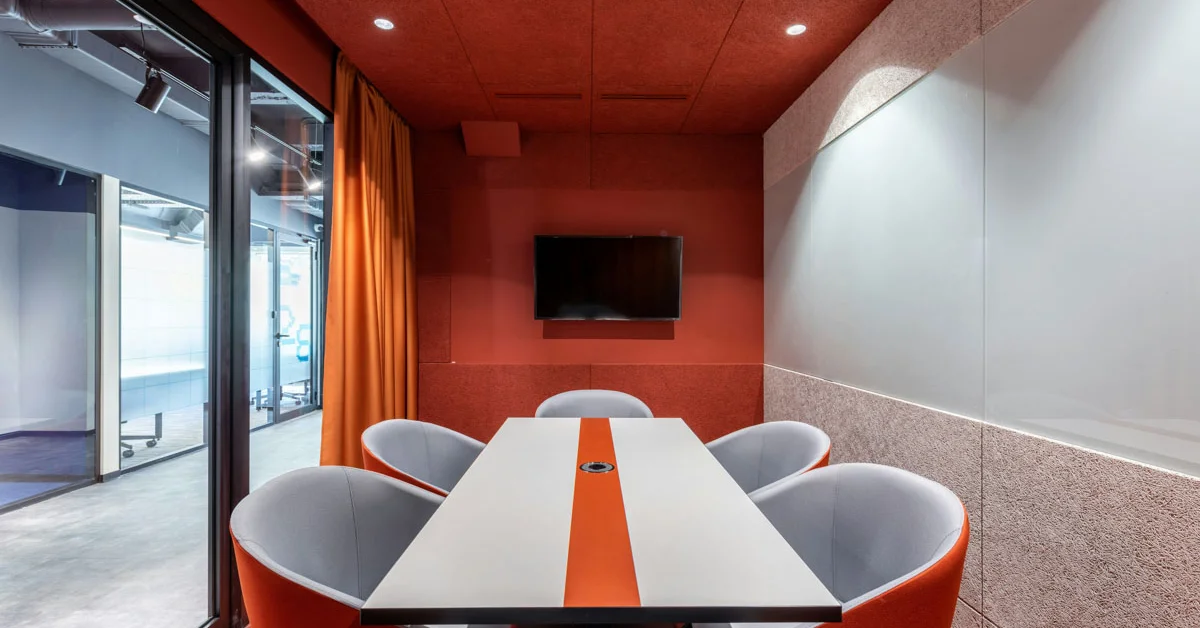
An effective way to make this transition tangible is to integrate residual materials into the new interior. Instead of purchasing only new raw materials, fragments from the existing office environment (such as old curtains or upholstery remnants) can be incorporated into functional wall panels.
This is not a major renovation, but a way to close the material loop locally. The result is an office that meets contemporary standards and communicates this immediately. The panel on the wall becomes a conversation starter: visible proof that the company takes material resources seriously.

Prototype panel made from reclaimed interior textiles
Acoustics
Would you like to explore which interior materials within your organization are suitable for reuse in circular wall panels? A first material scan quickly provides clear insight into what is possible.


